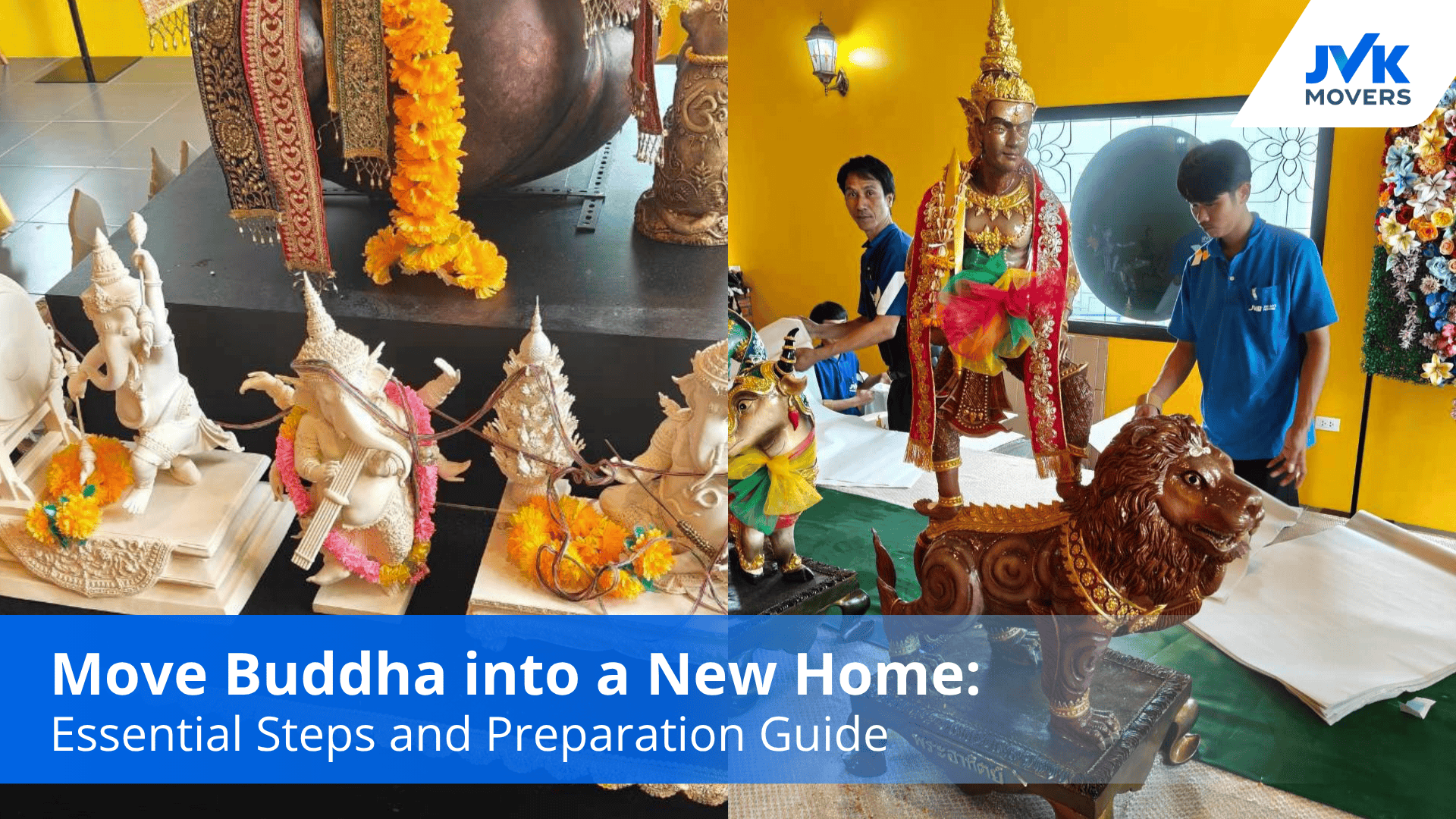
In Thai society, Buddha statues and sacred household images have long been deeply revered as spiritual anchors for many families. When moving to a new home, relocating these sacred items from the old residence to the new one is a deeply significant process. It often involves traditional practices passed down through generations such as selecting an auspicious date and time, preparing the sacred statues prior to transport, and arranging the shrine at the new residence. Naturally, specific ritual details and beliefs may vary according to each family’s traditions.
Beyond cultural beliefs, move Buddha statues requires extreme care and caution. Each sacred image varies in weight, size, and shape, with some featuring delicate craftsmanship or holding immense sentimental value. Proper pre-move preparation is therefore essential. In this article, JVK Movers has compiled every step of relocating Buddha statues to a new home from pre-move preparation to respectfully placing them on your new home altar.
Key Takeaways
- Prepare the Buddha statue and new shrine area before starting the relocation process.
- Pack and move the statue carefully to avoid impacts, scratches, or damage during transport.
- Choose an auspicious or convenient date to bring peace of mind to your household.
- Place the shrine in a clean, safe, and easily accessible location for worship.
- Hiring a professional team like JVK Movers guarantees safe handling and reduces stress during your move.
What to Prepare Before Move Buddha Statue into a New Home
1.Inspect Buddha Statues and Moving Items
Before moving, take a thorough inventory of all sacred images and altarpiece items including Buddha statues, bases, shrine tables, vases, and related accessories. Pay special attention to large, heavy, or delicate statues. Check for any components, and store smaller pieces systematically to simplify packing plans and prevent item loss during transit.
2.Prepare and Pack the Statues Securely
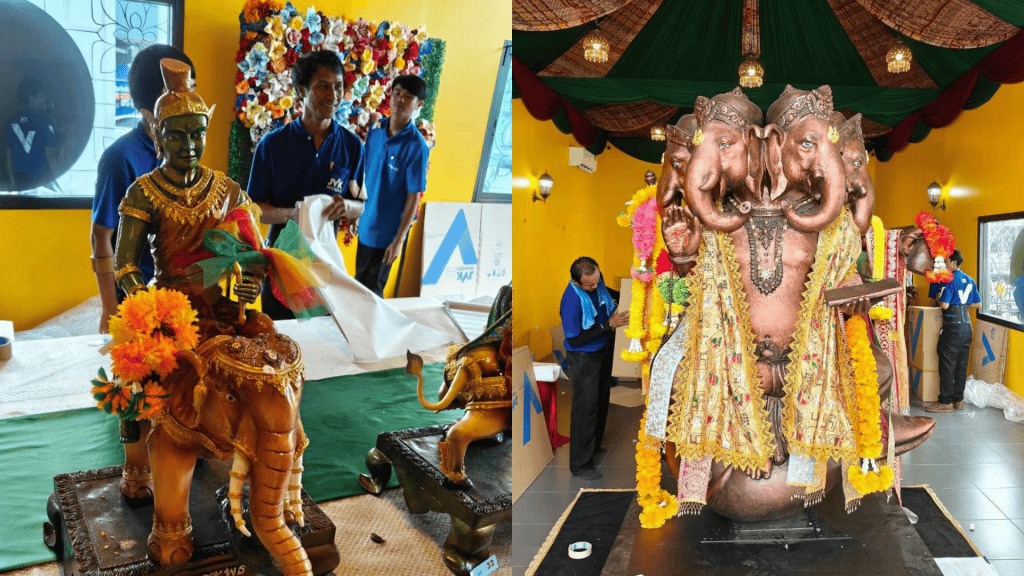
Packing Buddha statues requires maximum shock absorption and stability to prevent movement during transit. Wrap the statue’s surface with soft materials first, then add protective cushioning around delicate features such as fingers, facial details, or protruding ornaments. For heavy statues, use sturdy supporting bases to maintain balance, and choose surface-appropriate wrapping materials to protect against scratches and physical damage.
3.Prepare the Altar Space in Your New Home
Before arriving at your new residence, prepare the altar area in advance so the statues can be placed immediately upon arrival. Ensure the space is clean, organized, and structurally sound. Since placement positions and auspicious directions vary based on individual family beliefs, choose an arrangement that best fits your living space and family traditions.
4.Plan the Relocation Route and Transport Method
Inspect the entire moving route from exiting the old home to reaching the shrine location in the new house. Identify potential obstacles such as doorways, narrow hallways, staircases, or elevators. For large or heavy Buddha statues, evaluate the required manpower, lifting equipment, and support techniques to minimize the risk of impacts or damage during transit.
How to Pack and Move Buddha Statues Safely
Relocating a Buddha statue requires primary focus on preventing physical impacts, vibrations, and shifts during transit, especially for large, heavy, or delicate statues. When you move Buddha statues, effective packing goes beyond simply wrapping the surface; it must ensure the statue remains completely fixed and immobilized during transport. This is a crucial principle when handling sculptures and items that require specialized care.
1.Inspect the Buddha Statue Before Packing
Examine the physical condition before you move Buddha statues. Take note of existing cracks, minor damage, or fragile areas to identify key points that require extra caution during transport.
2.Protect the Statue’s Surface
Wrap the surface with soft, surface-appropriate materials to prevent scratches. Next, apply extra protective cushioning around protruding features, such as hands, fingers, and intricate facial details, which are particularly vulnerable during Buddha statue relocation.
3.Reinforce the Base and Dampen Vibrations
For heavy Buddha statues, ensure a sturdy supporting base is used. Position shock-absorbing materials to distribute weight evenly and absorb transit vibrations, preventing the statue itself from bearing direct pressure or impacts.
4.Prevent Buddha Statue Movement During Transport
Once wrapped, position the buddha statue securely and fill any surrounding gaps inside the box or crate. Immobilizing the statue is vital, as repeated shifts caused by vehicle vibration significantly increase the risk of damage.
5.Utilize Suitable Lifting Equipment and Handling Techniques
Large Buddha statues should never be lifted by brute force without prior assessment. Utilize proper lifting equipment and supporting rigs, and ensure the crew coordinates carefully when moving Buddha statues.
6.Plan and Clear the Moving Route
Inspect doorways, hallways, staircases, and tight spaces prior to lifting. Clearing obstacles along the path in advance helps determine the safest handling maneuvers before you move Buddha statues into a new home.
7.Check stability before departure
Once the buddha statue has been loaded onto the transport vehicle, perform a final check to ensure that the statue and all supporting materials are securely fastened. Verify that no parts will shift or impact other cargo during transit to minimize potential risks on the road.
When Is the Day to Move Buddha Statues to a New Home?
Moving Buddha statues into a new home does not follow a universal schedule, as tradition depends on individual family beliefs. Many choose an auspicious moving date and time to bring good fortune, prosperity, and peace of mind when settling into a new residence.
How to Position Buddha Statues in Your New Home
Once you move Buddha statues into your new home, prepare a designated altar space that is clean, well-proportioned, and offers sufficient room for worship and maintenance. If using a shrine shelf or a set of altar tables (Bucha tables), ensure the structure is sturdy and capable of properly supporting the statues’ weight.
Regarding position and orientation, the direction the buddha statue faces often varies according to each family’s traditions and personal beliefs. Some families prioritize auspicious compass directions or traditional placement rules, while others focus primarily on practical layout and available space. It is best to choose an arrangement that aligns with your family’s traditions. (Note that various Thai shrine placement guides offer differing advice regarding ideal directions and locations.)
If you need to move Buddha statues that are large or heavy, plan the final placement location and internal transit route in advance. This ensures the statues can be brought inside and placed safely into position without needing to be shifted or re-handled multiple times.
Finally, regarding the moving ritual or arrival ceremony, follow your family’s preferred customs. This may include preparing the space and positioning the sacred images on your chosen date. There is no single rigid rule that every household must follow—the most important aspect is completing the process respectfully as you move Buddha statues into a new home.
Precautions When Move Buddha Statues
Safety should be the top priority when you move Buddha statues, especially for pieces that are large, heavy, or intricately crafted. Before beginning the relocation, inspect the statue’s physical condition and plan the transport carefully to minimize any risk of damage.
Key precautions to keep in mind when you move Buddha statues include:
- Do Not Estimate Weight by Size Alone Never judge a statue’s weight solely by its physical dimensions. Verify its actual weight and assess the required manpower before lifting or attempting to move Buddha statues.
- Avoid Direct Contact with Fragile Features Refrain from holding or grabbing delicate protruding areas such as hands, fingers, crown tips, or fine decorative details as these parts are highly susceptible to breakage under pressure.
- Never Place Statues Directly on the Vehicle Floor Avoid setting the statues directly on a bare truck bed or car floor. Always use protective padding, and secure them tightly so they cannot shift, slide, or impact other items during transit.
- Respect Cultural Protocols Regarding Placement and Stacking In Thai tradition, sacred images are held in high reverence. When packing and transporting Buddha statues alongside other household items, always place the statues in the highest available position. Never stack other items or boxes on top of a Buddha statue, as doing so is culturally considered disrespectful and inappropriate.
- Inspect the Transport Route in Advance Check all entryways, narrow hallways, staircases, and elevators prior to movement to ensure you can pass through safely without obstruction.
- Avoid Dragging or Impacting the Statue Never drag the statue across floor surfaces or allow it to bump against structures. Doing so risks damaging both the sacred image and your.
Why Choose JVK Movers for Relocating Buddha Statues?
Relocating Buddha statues requires both meticulous planning and specialized care, especially for statues that are large, heavy, or intricately detailed. At JVK Movers, we prioritize site assessments, route planning, and tailored handling techniques designed specifically for each unique Buddha statue.
Key Advantages of JVK Movers
- Professional & Experienced Crew Specialized expertise in moving heavy, fragile, and high-value items with white-glove care.
- Proven Track Record Extensive experience in residential, office, and heavy machinery/sculpture relocations.
- End-to-End Planning Comprehensive site-to-site planning from pre-move preparation and packing to final placement at your new home altar.
- Tailored Equipment & Techniques Selection of specialized lifting gear, rigs, and packing materials suited to the exact weight and dimensions of each buddha statue.
- Capability for Complex Relocations Fully equipped to solve spatial constraints, tight stairwells, or complex access limitations.
When you need to move Buddha statues that are exceptionally large or fragile, hiring an experienced moving team significantly mitigates transit risks. It eliminates the physical burden and technical stress of heavy lifting for homeowners.
Furthermore, JVK Movers offers a complete suite of full-service moving solutions, including home relocation, office moving services and large-scale moves, allowing us to customize every project to meet your specific needs seamlessly.
Frequently Asked Questions (FAQs)
Can you move Buddha statues along with the altar set and accessories?
Yes, we can plan the relocation of Buddha statues together with the altar set (Bucha tables), bases, vases, candle holders, and other ritual accessories. Before packing, each item should be inspected for its size, weight, and physical condition. This ensures appropriate packing materials are selected and prevents small items or fragile accessories from being misplaced during transport.
What should be done if a Buddha statue already has cracks or pre-existing damage?
Inspect and document the Buddha statue’s physical condition thoroughly before packing, and inform the moving team about all sensitive areas requiring extra care. If there is a risk of further damage during transport, the team must evaluate appropriate support methods and specialized equipment before initiating the relocation.
What details should be provided to the moving company before the move?
You should provide the estimated dimensions, weight, and material of the statue, along with the total number of items to be moved. Additionally, share access details for both the origin and destination properties-such as the floor level, doorway dimensions, staircases, elevators, and any spatial constraints, so the team can construct an accurate moving plan.
Can JVK Movers perform a site assessment prior to the relocation?
Yes. We encourage you to contact JVK Movers with details regarding your Buddha statues and the physical layout of both locations. Our team will use this information to conduct a site assessment, determining the most effective transit routes, handling methods, and specialized equipment before we move Buddha statues for your project.