A stack of dozens of books might look easy to pack at first glance. However, when moving day arrives, books quickly turn out to be one of the items requiring special care. Packing books into boxes without considering their weight or proper stacking techniques can lead to damaged pages, bent spines, or broken boxes during transit.
So, how to pack books for moving safely and efficiently? This guide walks you through everything from sorting your collection and choosing the right boxes to step-by-step packing methods and critical mistakes to avoid.
Key Takeaways
- When planning how to pack books for moving, categorize your collection first to reduce total moving weight and streamline unpacking at your new home.
- Books are heavy, choosing the right box size prevents bottom-bursting and injuries.
- Marking your boxes makes locating specific books effortless and speeds up post-move organization.
- After moving, inspect book conditions and organize them properly.
What to Prepare Before Packing Books
Before learning how to pack books for moving, strategic preparation is essential to reduce weight, save space, and minimize damage.
1.Sort Your Collection
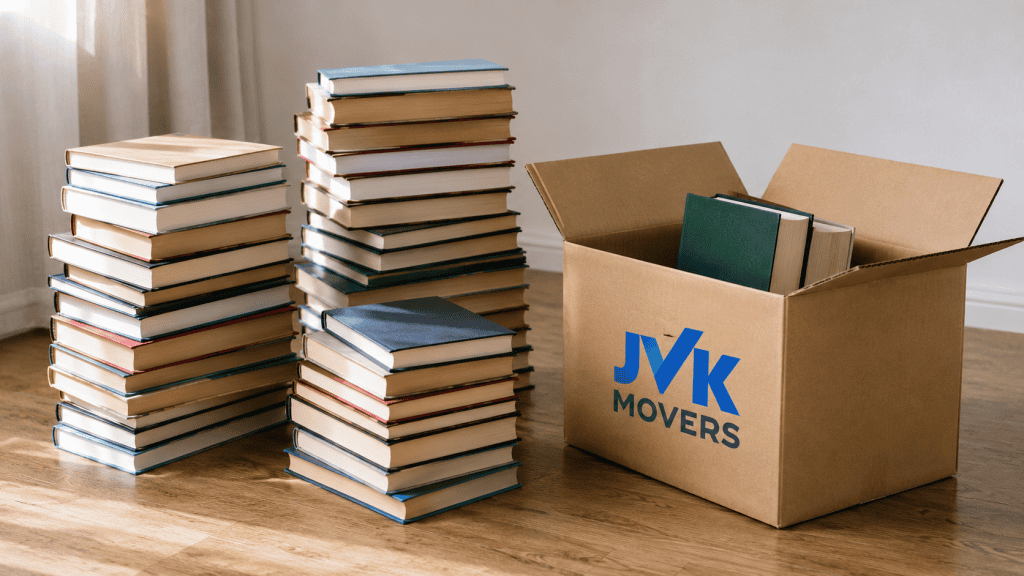
Go through your bookshelf and divide titles into three categories: books to keep, books to donate or sell, and books with sentimental value. Purging unneeded items reduces overall cargo volume and saves moving costs.
2.Assess Quantity and Book Sizes
Group your books by size and weight. Hardcovers, heavy textbooks, and delicate paperbacks require different handling during the packing process.
3.Estimate the Number of Boxes Needed
Gather enough small to medium-sized cardboard boxes. Never overfill or overload a box—heavy containers are prone to tearing and make lifting dangerous.
Essential Packing Materials for Moving Books
Before diving into how to pack books for moving, having the right moving supplies on hand ensures a smooth, damage-free packing process:
- Cardboard Boxes: The primary equipment for packing books. Choose sturdy boxes that fit your book volume properly to support the weight and make lifting and transport convenient.
- Heavy-Duty Packing Tape: Essential for securing both the top and bottom flaps of your boxes. Use strong, durable tape to prevent the bottom from bursting or opening during transit.
- Packing Paper & Box Liners: Used to line the bottom of boxes before packing, wrap individual books, or crumple up to fill empty spaces. This reduces book movement and friction during transport.
- Cushioning Materials (Bubble Wrap): Ideal for books requiring extra care, such as collector’s items, rare editions, or books with sentimental value.
- Permanent Markers & Stickers: Used to label book categories and contents on the outside of each box, making items effortless to locate and unpack after moving.
Step-by-Step Guide: How to Pack Books for Moving
Follow these 6 steps to pack your book collection securely for moving day:
1.Reinforce the Box
Tape the bottom seams of your cardboard box using heavy-duty packing tape. Apply multiple layers across the center seam and edges using the “H-taping” method to prevent the bottom from giving way under heavy loads.
2.Line the Bottom
Place a layer of bubble wrap at the bottom of the box. This provides a shock-absorbing base that protects book edges from impacts during transport.
3.Pack and Stack Books Correctly
Mastering how to pack books for moving requires using the right stacking technique based on book type:
- Flat (Horizontal): Ideal for heavy books or hardcovers. Stack the heaviest titles at the bottom.
- Spine-Down (Vertical): Place books upright with their spines resting against the bottom of the box. Never pack books with edges facing down, as this causes pages to separate from the binding.
- Spine-to-Spine: Alternate book directions to keep the stack level and prevent pages from catching on each other.
4.Fill Empty Space
Gaps inside the box cause items to shift during transit. Fill all remaining spaces with packing paper or bubble wrap to hold the books firmly in place.
5.Seal the Box Securely
Close the top flaps and seal them thoroughly with packing tape. Ensure the box top is flat so boxes can be stacked safely inside the moving truck.
6.Label and Categorize
Write the contents on the side of the box (e.g., “Study Room – Hardcover Novels”) and add a “HEAVY” or “FRAGILE” tag. Labeling sides ensures readability even when boxes are stacked on top of each other.
Common Mistakes to Avoid When Packing Books
Common errors when packing books for moving include:
- Incorrect Book Placement: Stacking books with the spine facing directly up or down can cause the weight of the book block to pull against the binding, distorting the book’s shape.
- Overloading Boxes: Packing too many books into a single box can cause crushing, spine damage, or structural failure of the container.
- Stacking Heavy Boxes on Lighter Ones: Placing heavy boxes on top of lighter ones can crush the bottom boxes and damage the books inside.
- Leaving Excess Empty Space: Unfilled gaps cause books to shift and collide during transport. Always fill remaining space with paper or suitable cushioning materials to keep the books firmly in place.
Even if you know how to pack books for moving properly, choosing the right moving method plays a vital role in minimizing the risk of damage. If you have a large book collection or feel unsure about lifting and moving heavy boxes yourself, hiring a professional moving service with a dedicated team can ensure proper handling, streamline the moving process, and significantly reduce the stress of moving house.
How to Store Books After the Move
After packing and relocating your books to your new home, avoid unpacking in a hurry and placing them randomly. If you hired a Residential and Condo Moving Services, inspect the condition of the boxes and books before organizing them. To preserve the condition of your books, follow these post-move book storage guidelines:
- Choose a dry, well-ventilated space: Reduces the risk of moisture buildup and mold growth.
- Avoid direct sunlight: Prevents book covers and pages from fading, yellowing, or deteriorating over time.
- Organize by category and size: Makes locating specific titles easier and simplifies your bookshelf arrangement.
- Keep books off floors and away from walls: Leave space between books and concrete walls or floors to prevent humidity and moisture transfer.
- Unpack promptly after moving: Remove books from moving boxes and arrange them using proper storage methods.
- Consider self-storage solutions: For extensive book collections or limited home space, using a facility like MeSpace Self Storage provides a convenient way to expand your storage capacity
Frequently Asked Questions (FAQs)
Can I hire professional movers if I don’t have time to learn how to pack books for moving myself?
Yes. Professional moving services like JVK Movers offer full packing and handling services. Experts use specialized packing materials and techniques to handle heavy collections and fragile rare books safely.
What should I do if I don’t have enough shelf space at my new home?
If you find that you have too many books and insufficient storage space after moving, utilizing MeSpace Self Storage is an excellent alternative to expand your storage capacity without renovating your home. You can select the ideal room size to fit your specific book collection.
If you have a massive book collection and limited space after relocating, you can rely on JVK Movers for end-to-end moving and storage solutions. Our comprehensive service covers everything from professional book packing and transport to secure storage in JVK Movers’ warehouse facilities. This minimizes the hassle of managing large volumes of books while ensuring your collection receives proper care throughout the entire moving and storage process.