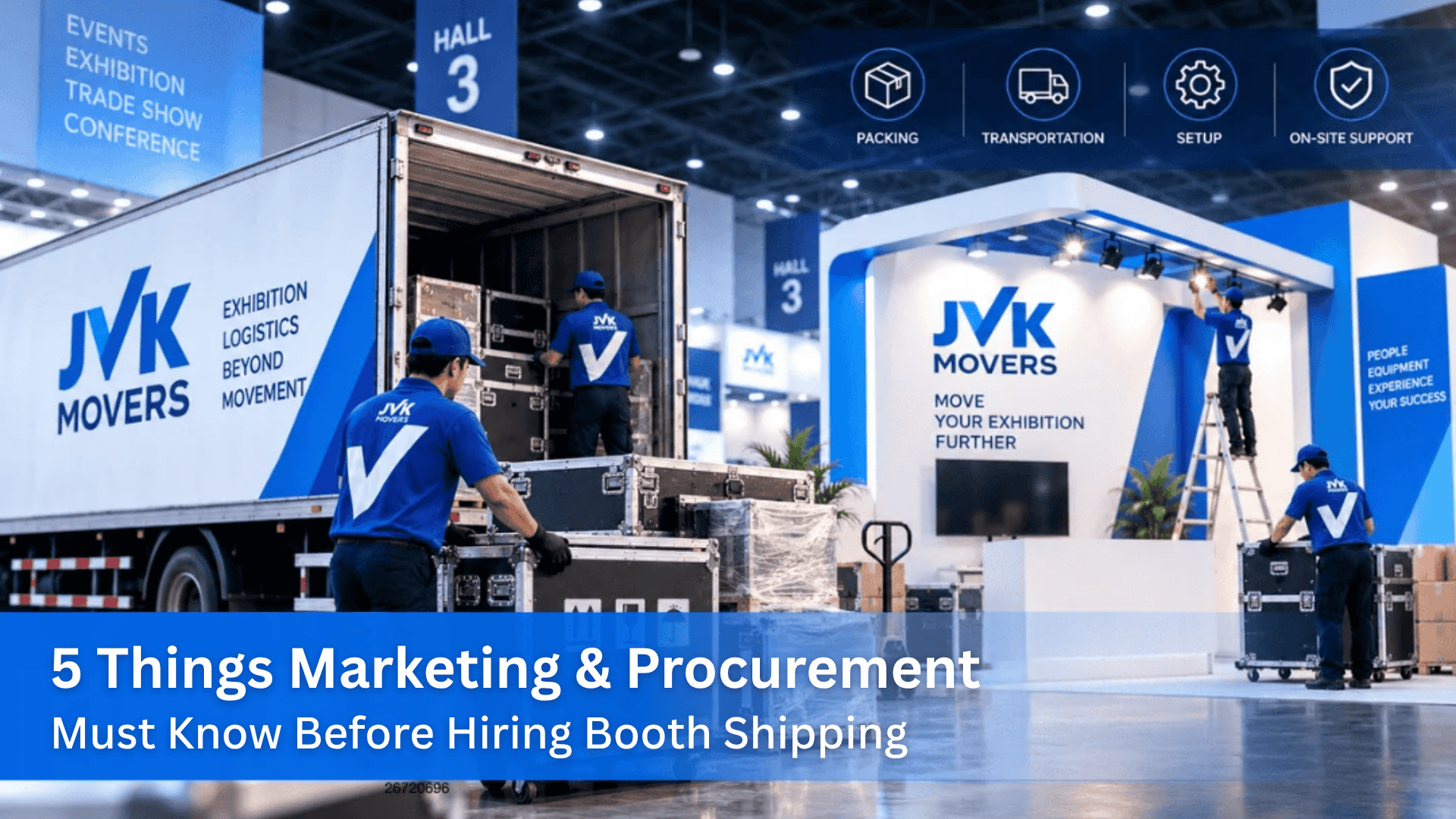
Exhibition participation is one of the most critical marketing activities, especially for B2B businesses. Whether it involves exhibitions, trade shows, conferences, or promotional events, companies must transport equipment and booth structures to present their brand to target audiences.
However, before creating an attractive and engaging booth for visitors, moving beyond design and setup, another equally critical activity is booth shipping. Moving booth structures and exhibition equipment to the event venue safely and on time is essential.
The quantity and size of booth equipment depend directly on the booth category and displayed products. Major items typically include structural frameworks, furniture, display monitors, electrical equipment, backdrops, rollups, standees, and promotional brochures. Without careful handling during transit, assets risk physical damage, operational malfunction, or shipping delays that directly compromise installation timelines.
For marketing and procurement teams, understanding the fundamentals of booth shipping ensures effective control over budgets, operational risks, and overall project timelines.
Key Takeaways
- Define your booth shipping requirements before requesting quotes, price gaps usually stem from scope differences, not base costs.
- Preparing a comprehensive inventory checklist enables providers to accurately plan vehicles, staffing, and cargo protection.
- Specify location details, schedules, and venue rules clearly, as exhibition deadlines are fixed.
- Compare total cost, not just transport rates, when deciding between Internal handling and professional moving services.
- Choose a specialized booth shipping or exhibition mover offering full-service support and insurance.
5 Steps to Plan Booth Shipping Within Budget and On Schedule
The quantity and size of booth equipment depend directly on the booth type and displayed products. Standard inventory typically includes structural frameworks, furniture, display screens, electrical items, backdrops, rollups, standees, and promotional flyers. Without proper handling during booth shipping, these items risk physical damage, operational issues, or transit delays that impact installation schedules.
1.Clearly Define the Scope of Work
The first step before contacting exhibition movers is defining the required scope of work. Scope responsibilities directly affect booth shipping pricing, far beyond basic weight and transit distance.
- Transportation Only : Pick up and delivery
- Loading & Unloading : Includes cargo handling services
- Packing + Transportation : Includes packing and transport
- Packing + Loading + Transportation + Unloading
- Full-service Exhibition Logistics : End-to-end management covering Packing, Loading, Transportation, Unloading, through to Storage
Defining a detailed scope of work early helps both marketing and procurement teams align clear expectations with service providers. This also ensures that quotes received from different vendors can be compared fairly.
For instance, if one vendor quotes solely for vehicle transport while another includes moving labor and cargo handling services, the price difference does not necessarily indicate that the first option is cheaper or the second is more expensive. It simply reflects a difference in scope of work.
2.Prepare A Comprehensive Inventory Checklist Before Moving
Once the Scope of Work has been defined, it is crucial to provide the service provider with as much information as possible regarding the items to be transported:
- List of equipment items and exact quantities per category
- Estimated dimensions and overall weight
- Total number of boxes or packages
- Fragile equipment, high-value, or specialized items requiring custom care
When marketing or procurement teams provide complete and accurate information, booth shipping providers can accurately evaluate vehicle types, trip counts, staffing needs, lifting equipment, and specialized protective packaging. Detailed cargo data ensure precise operational planning, effective cost control, and prevent budget overruns.
3.Specify Pickup Locations, Delivery Destinations, and Schedules Clearly.
For exhibition events, “timing” is extremely critical because event schedules have firm deadlines that cannot be shifted. Furthermore, venue regulations must be briefed to logistics providers so they can properly assess and plan booth shipping operations.
Essential information marketing and procurement teams must provide includes:
Pickup location
- Pickup Location
- Pickup date and time
- Onsite contact person
- Site access restrictions
Delivery Location
- Delivery Destination
- Desired delivery date and time
- Onsite receiving contact
- Venue access restrictions
Schedule
- Setup date
- Allowed setup window
- Event opening date
- Dismantling date
This information will enable booth shipping or exhibition movers to optimize vehicle planning, equipment allocation, route selection, and manpower deployment effectively.
4.Verify Venue Requirements and Notify The Service Provider in Advance
In addition to cargo details, venue regulations represent another critical piece of information to provide to your logistics partner.
Each venue or event organizer enforces distinct operational conditions regarding site access, setup, and teardown procedures.
Essential venue information to share with your moving services before execution includes:
- Load-in / Load-out timeline.
- Loading area designated zones.
- Vehicle size and height restrictions.
- Registration procedures.
- Loading dock reservation.
- Freight elevator operational limits.
- Move-in and setup regulations.
- Insurance and documentation compliance.
Marketing teams naturally coordinate this information with organizers and venue management. Therefore, once requirements are finalized, promptly sharing them with procurement teams and booth shipping providers during early planning remains essential.
5.Establishing Budgets, Insurance, and Service Levels
Once the scope and requirements are defined, marketing and procurement teams must evaluate Costs and Service Level Agreements (SLA). Setting clear budget parameters and verifying line items in vendor quotations are essential to understanding what each offer includes.
Key cost components to verify include:
- Transportation costs
- Loading and Unloading costs
- Packing costs
- Specialized equipment costs
- Waiting time and overtime costs
- Tolls and incidental costs
- Storage costs
Requesting an itemized cost breakdown enables procurement teams to assess total expenditure and make objective comparisons between vendors accurately.
Why Booth Shipping Requires Specialized Expertise?
Booth shipping differs significantly from standard freight transport because booth materials vary widely in dimensions, geometry, weight, and fragility.
Structural components are often bulky, requiring structured loading configurations, whereas digital displays and sensitive electronic equipment demand specialized impact mitigation during transit.
Furthermore, trade shows operate under rigid temporal and spatial constraints, including strict load in and load out schedules, designated unloading zones, vehicle height limits, and specific venue access protocols.
Consequently, effective booth shipping extends beyond transporting items from A to B. It encompasses comprehensive logistics management, spanning inventory verification, professional packing, specialized vehicle selection, route planning, and timely handover for immediate installation.
Comparison: Moving It Yourself vs. Hiring Professional Booth Shipping Providers
For companies equipped with internal personnel and tools, booth shipping management independently may initially appear cost effective. However, organizations should evaluate the total cost of operation rather than focusing solely on direct vehicle expenses.
True operational expenditures often encompass staff labor costs, specialized handling equipment, diverted employee time, and potential financial risks associated with cargo damage or delayed site delivery.
| Key Points | In House Execution | Professional Exhibition Moving Company |
|---|---|---|
| Value for money | Saves on service costs. But incurs expenses for labor and equipment. | Estimate total costs and plan resources appropriately for the task. |
| Security | The internal team must be responsible for packing, lifting, and transportation. | Have a team with experience in moving various types of equipment. |
| Timeline | Employees must set aside time from their primary responsibilities to handle logistics | Reduce internal workload and let professionals handle the exhibition. |
| Insurance | The company must bear the risk itself. | Choose a service provider that offers product warranties under suitable terms. |
Therefore, for projects involving large volumes of equipment, high-value cargo, or tight time limits, hiring professional moving services reduces the operational burden on internal teams while mitigating critical project risks.
How to Choose a Reliable Booth Shipping Providers
Selecting an exhibition booth shipping provider shouldn’t rely solely on finding the lowest price. Instead, organizations must evaluate a provider’s end-to-end logistics capabilities from origin to the event venue. Essential factors to consider include:
Specialized Experience In Events and Exhibitions
Service providers should possess proven experience in event and exhibition environments because these projects present unique constraints, including strict venue entry and exit timelines and the handling of diverse equipment types.
Experience with these specific requirements enables providers to anticipate potential issues and design realistic booth shipping plans tailored to actual operational conditions.
Comprehensive Transit Insurance Coverage
Should verify whether providers offer insurance coverage while carefully reviewing the coverage scope, policy limits, and relevant terms, particularly when moving high-value equipment.
Having adequate insurance coverage builds confidence and mitigates financial risk should unexpected incidents occur during transit.
Includes A Team and Full-service Offerings
For projects involving large volumes of equipment, selecting a provider capable of offering more than simple driving and delivery services, such as packing, cargo handling, transport, teardown, and installation support, reduces the number of contact points and streamlines overall project management.
Professional Booth Shipping: Mitigating Risks from Start to Venue
Executing safe and cost-effective booth shipping depends on aligning logistics planning with specific equipment characteristics and venue constraints, rather than selecting the lowest-cost transportation provider.
From compiling an inventory checklist and verifying cargo dimensions and weight to selecting appropriate packaging, reviewing venue regulations, and planning transport routes and schedules, every step contributes to risk reduction and cost control.
For marketing and procurement teams, selecting a provider with booth shipping experience extends far beyond simply hiring someone to “deliver cargo to the venue”. It means choosing a strategic partner that can manage logistics risks to ensure all equipment arrives complete, safe, and ready for assembly when critical event deadlines hit.
Frequently Asked Questions (FAQs)
How does booth shipping differ from standard freight transport?
Booth shipping requires managing diverse equipment types with varying dimensions, weights, and levels of fragility. Furthermore, exhibitions impose strict schedule and venue restrictions, such as Load-in and Load-out timelines that demand precise management. This stands in sharp contrast to standard freight transport, which rarely operates under such rigid time constraints
How many days in advance should booth shipping planning begin?
Planning should begin as soon as the scope of work and event schedule are established. The earlier you share inventory details and venue requirements with your provider, the more precisely they can plan vehicles, labor teams, and transport routes.
Can move booth by self? is it not always necessary to hire professionals?
In-house execution is achievable if you have sufficient internal staffing and proper equipment. However, organizations must evaluate total costs, (including labor, equipment, time, and potential risk, rather) than considering vehicle rental expenses alone.
What is covered in a full-service exhibition move?
Services cover packing, loading, transportation, unloading, and storage, allowing marketing and procurement teams to avoid coordinating with multiple separate vendors.